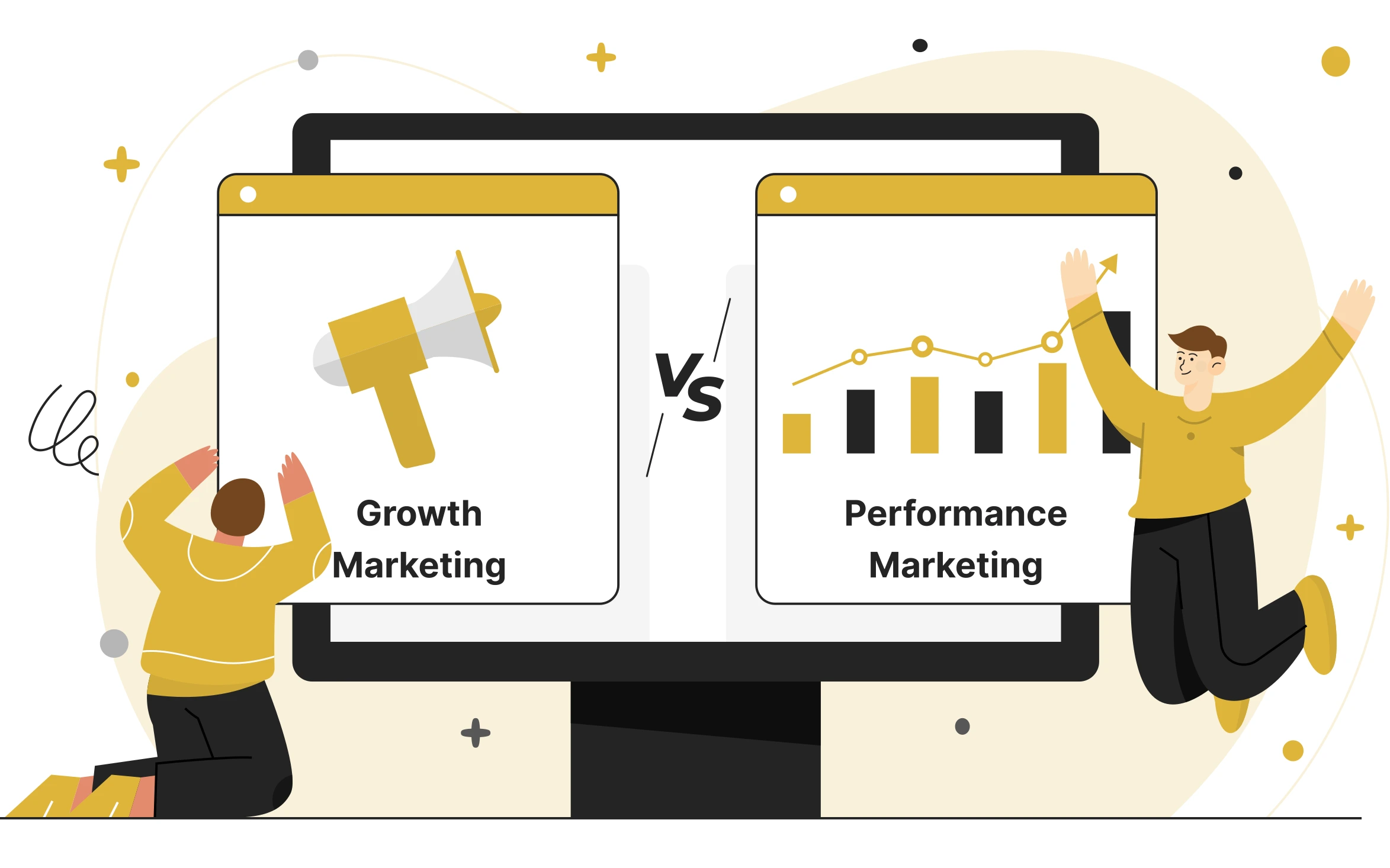
Choosing the right marketing strategy can make or break your business growth. Two popular approaches, performance marketing and growth marketing, promise to drive results, but they work in completely different ways. One focuses on quick wins through paid advertising, while the other builds sustainable growth over time.
Understanding which approach fits your business goals, budget, and timeline is crucial. Many companies waste money on the wrong strategy, missing opportunities to scale effectively. This guide breaks down both approaches in simple terms, helping you decide which marketing engine will power your business forward.
What is Performance Marketing?
Performance marketing is like a vending machine; you put money in and get immediate results out. This approach focuses on paid advertising where you only pay when someone takes a specific action, like clicking an ad, filling out a form, or making a purchase.
The beauty of performance marketing lies in its simplicity. You can track every dollar spent and see exactly what it generates. If a Google Ad costs $5 and brings in a $50 sale, you know that campaign is working. This direct connection between spending and results makes it attractive to businesses that need quick wins.
How Performance Marketing Works
Performance marketers use several key channels to drive immediate results:
Paid Search Advertising puts your business at the top of Google when people search for your products or services. These ads target people who are already looking for what you offer, making them more likely to convert.
Social Media Advertising on platforms like Facebook, Instagram, and LinkedIn lets you target specific audiences based on age, interests, location, and behavior. You can reach potential customers who might not be actively searching but fit your ideal customer profile.
Affiliate Marketing partners with other websites or influencers who promote your products. You only pay them when they generate a sale, spreading your marketing reach without upfront costs.
Email Marketing sends targeted messages to people who have already shown interest in your business. These campaigns often generate high returns because they reach warm prospects.
The Benefits of Performance Marketing
The biggest advantage is speed. You can launch a campaign today and see results within hours or days. This makes performance marketing perfect for product launches, seasonal sales, or when you need to boost revenue quickly.
Everything is measurable. You can track which ads work, which audiences respond best, and exactly how much revenue each campaign generates. This data helps you optimize spending and improve results over time.
Scaling is straightforward. When you find a winning campaign, you can increase the budget and reach more people. This predictability makes it easier to plan for growth.
The Downsides of Performance Marketing
The main challenge is cost. As more businesses compete for the same audience, advertising prices go up. What worked last year might be too expensive this year.
Platform dependency creates risk. If Google or Facebook changes their algorithm or policies, your results can drop overnight. This happened to many businesses during recent iOS privacy updates.
Performance marketing typically focuses on the bottom of the sales funnel, people ready to buy. This approach might neglect building brand awareness or nurturing long-term customer relationships.
What is Growth Marketing?
Growth marketing is like planting a garden. You invest time and effort upfront to build something that produces results for years to come. Instead of focusing only on paid ads, growth marketing optimizes the entire customer journey from first awareness to loyal advocacy.
Growth marketers think beyond immediate sales. They want to understand why customers buy, how to keep them happy, and how to turn them into brand ambassadors who bring in more customers.
How Growth Marketing Works
Growth marketing uses a mix of strategies to build sustainable business growth:
Content Marketing creates valuable resources that attract potential customers naturally. Blog posts, videos, guides, and tools help people solve problems while building trust in your brand.
Search Engine Optimization (SEO) helps your website show up in Google search results without paying for ads. Good SEO can drive traffic for months or years after you publish content.
Product-Led Growth integrates marketing into your product experience. Features like referral programs, in-app messaging, and smooth onboarding help the product sell itself.
Community Building creates spaces where customers connect with each other and your brand. Online forums, user groups, and events generate word-of-mouth marketing.
Conversion Rate Optimization systematically improves how well your website turns visitors into customers. Small improvements compound across all your marketing channels.
The Benefits of Growth Marketing
Growth marketing builds assets that keep working over time. A blog post written today might still bring in customers next year. This creates compound growth that doesn’t rely on continuous spending.
The holistic approach often reveals unexpected opportunities. You might discover that improving customer onboarding reduces advertising costs, or that content marketing generates higher-quality leads than paid ads.
Sustainable competitive advantages emerge as you build owned channels like SEO rankings, email lists, and customer communities. Competitors can copy your ads, but they can’t replicate years of content and relationships.
The Downsides of Growth Marketing
Results take time. SEO and content marketing can take 6-12 months to show a significant impact. This delayed gratification is challenging for businesses that need immediate results.
Success requires experimentation, and experiments sometimes fail. This uncertainty can be uncomfortable compared to the predictable nature of performance marketing.
Growth marketing needs diverse skills and team coordination. You might need content creators, SEO specialists, product managers, and data analysts all working together.
Performance vs Growth Marketing: Side-by-Side Comparison
| Factor | Performance Marketing | Growth Marketing |
| Timeline | Days to weeks | Months to years |
| Cost Model | Pay per action | Upfront investment |
| Scalability | Quick budget increases | Compound growth over time |
| Risk | Platform dependency | Experimentation uncertainty |
| Best For | Immediate needs | Long-term building |
When to Choose Performance Marketing
Performance marketing works best when you need quick results. Here are ideal situations:
Product Launches benefit from the immediate visibility that paid ads provide. You can generate buzz and sales right away while your organic marketing efforts develop.
Seasonal Businesses like tax services, holiday retailers, or summer camps need to maximize short selling windows. Performance marketing helps capture demand when it’s highest.
Proven Products with clear value propositions and optimized sales processes can scale quickly through performance marketing. If you know your conversion rates and customer value, you can confidently increase ad spending.
Competitive Responses sometimes require immediate action. If a competitor launches a new product or runs aggressive campaigns, performance marketing helps you respond quickly.
When to Choose Growth Marketing
Growth marketing makes sense for businesses playing the long game:
Established Companies with existing customer bases should focus on maximizing lifetime value and building sustainable advantages. Growth marketing helps reduce dependence on expensive paid channels.
Complex Products that require education and trust-building benefit from content marketing and SEO. B2B software, professional services, and high-consideration purchases often need longer sales cycles.
Competitive Markets where advertising costs are rising need sustainable alternatives. Growth marketing builds owned channels that protect against increasing paid media costs.
Resource-rich organizations with diverse teams can coordinate the cross-functional efforts that growth marketing requires.
The Hybrid Approach: Best of Both Worlds
Many successful businesses don’t choose one or the other; they combine both strategies strategically. Here’s how to create an effective hybrid approach:
Start with Performance Marketing to generate immediate cash flow and validate demand. Use paid ads to understand your audience and optimize your sales process.
Invest Growth Marketing Profits into long-term assets. Reinvest performance marketing returns into content creation, SEO, and product improvements.
Time Your Transitions carefully. As organic channels mature and advertising costs rise, gradually shift budget from performance to growth marketing.
Share Data Between Approaches to improve both strategies. Customer insights from performance marketing campaigns inform content strategy, while growth marketing data helps optimize paid campaigns.
Real-World Example: E-commerce Success
An online clothing brand started with performance marketing to validate demand and generate quick sales. Facebook and Google ads drove immediate revenue while the team built their content marketing strategy.
After six months of profitable performance marketing, they invested 30% of ad profits into growth initiatives: influencer partnerships, SEO-optimized blog content, and an email marketing program.
Within 18 months, organic channels generated 40% of new customers while advertising costs remained stable. The hybrid approach created both immediate cash flow and long-term sustainability.
Making Your Decision
Choose performance marketing if you need quick results, have a proven product, and can afford ongoing advertising costs. This approach works well for immediate goals and competitive responses.
Select growth marketing if you’re building for the long term, want to reduce advertising dependence, and have the resources for experimentation. This strategy creates sustainable competitive advantages.
Consider a hybrid approach if you want both immediate results and long-term growth. Start with performance marketing for quick wins, then reinvest profits into growth marketing assets.
Your Next Steps
Evaluate your current situation honestly. Do you need immediate results or sustainable growth? What’s your budget and timeline? How competitive is your market?
Start with one approach and execute it well before adding complexity. Whether you choose performance marketing, growth marketing, or a combination, focus on measuring results and improving over time.
Remember that successful marketing isn’t about choosing the perfect strategy; it’s about choosing the right strategy for your current situation and executing it consistently. Both approaches can drive significant results when applied correctly.
The future belongs to marketers who understand when to use each strategy and how to combine them for maximum impact. By matching your marketing approach to your business needs, you can build a system that delivers both immediate results and long-term success.